StuG III Ausf. G: Firing Trials Against the Schürzen
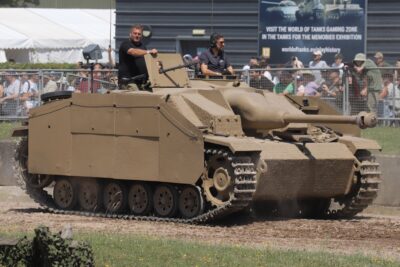
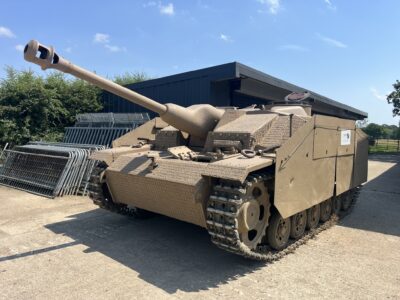
The skirts on our StuG III were not guesswork. A 1943 German firing trial, tested them against anti-tank rifles and shells. We look at what it found, and lay the anti-bazooka myth to rest.

The skirts on our StuG III were not guesswork. A 1943 German firing trial, tested them against anti-tank rifles and shells. We look at what it found, and lay the anti-bazooka myth to rest.

The Weald Foundation’s StuG III Ausf. G, known as the ‘Black Sea StuG’, was lost at sea in 1943 on its way to an artillery unit in the Crimea. By then the type carried a gun that made it one of the war’s most effective tank-killers, yet it was still designated a Sturmgeschütz, an assault gun, rather than a Panzerjäger or Jagdpanzer. Drawing on a wartime naming memorandum, this article explains why the German army let the name stand apart from the weapon’s true role.

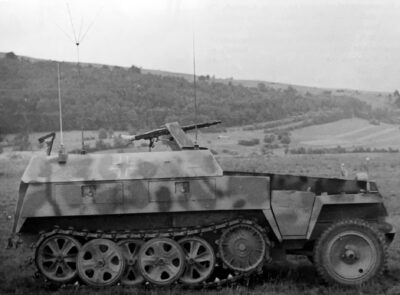
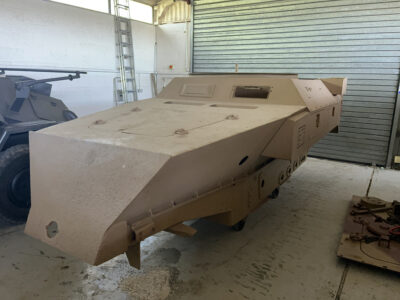
On 23 August 1944, twenty-five leichte Schützenpanzerwagen departed for 6. Panzer-Division. On 28 and 30 September, another thirty followed. These dispatches, documented in the records of the Generalinspekteur der Panzertruppen, are the equipment inputs to a Vollausstattung programme due to complete on 15 October 1944. Part 3 of the revisited provenance research on the Foundation’s Sd.Kfz.250/3 Ausf.B brings the three documents together and shows where they leave the chassis-to-unit link.

In Part 1 we read what the vehicle itself can tell us. Part 2 turns to the documentary record. Working through the Kriegsstärkenachweisungen that bracket where a Sd.Kfz.250/3 should sit within a Panzer-Aufklärungs-Abteilung, the actual strength returns of Pz.A.A 6 showing four Sd.Kfz.250/3 on hand at the end of December 1944, and the path of 6. Panzer-Division from its summer 1944 refit through to Hungary and the eventual withdrawal to Austria in March 1945.

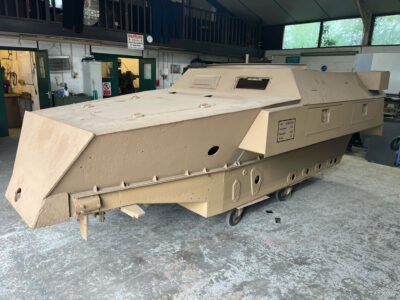
The Foundation’s Sd.Kfz.250/3 Ausf.B is returning to the workshop programme, and with it the provenance research Mike began in April 2016. This first instalment in a renewed series revisits what the vehicle itself can be made to tell us. The condition of the hull when it came out of the ground in Hungary. The data plate read by Tom Jentz, with chassis 410071, body 3617, and the lsb assembler code. The shield of the 6. Panzer-Division on the rear access door, in its particular orientation. Part 1 of the renewed series.

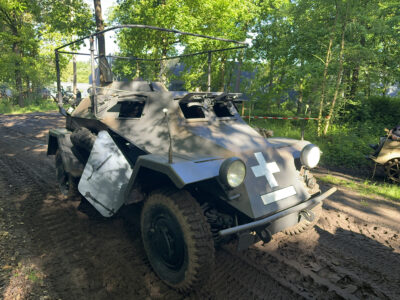
Our first return to Militracks since 2019 saw the newly camouflaged Sd.Kfz.223 run daily on the one mile track at the Oorlogsmuseum Overloon. We drew strong interest from visitors, trialled loaned radio equipment in the field, and met some wonderful enthusiasts along the way.

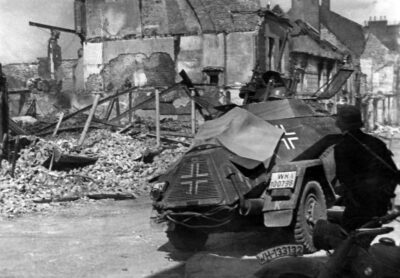
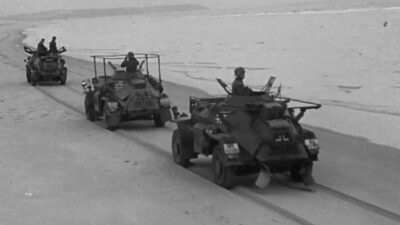
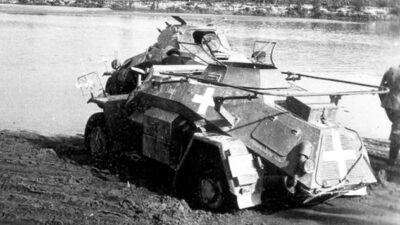
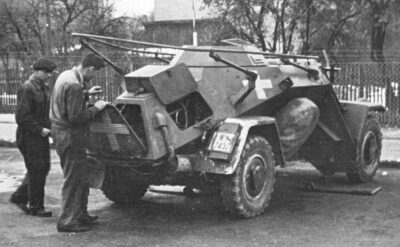
H.M. 1939 Nr. 770 was clear: white bars only, outline cross, no black. A review of period photographs of German armoured cars tells a more varied story — two different interpretations of bar spacing, rear crosses smaller than ordered, and by around 1942, a black centre cross that no order ever specified. This article applies the regulatory chain to the Foundation’s Sd.Kfz.222 and looks at what crews actually painted.

The solid white Balkenkreuz introduced in July 1939 did not outlast its first campaign. Six days after the Polish campaign ended, the Army General Staff wrote to condemn it as a danger to the vehicles it was meant to identify. On 26 October 1939, H.M. Nr. 770 changed the system permanently, removing the front cross entirely and replacing the solid white mark with the outline form that would remain standard for years to come.

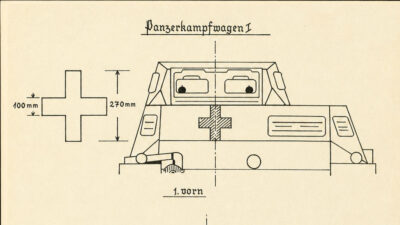
In July 1939 the Oberkommando des Heeres issued a classified order establishing the Balkenkreuz on all German armoured vehicles. Accompanying it was Annex 1: a set of individual placement sheets, one per vehicle type, giving the exact dimensions and position of the cross on every tank then in German service. This article opens that annex and works through what it specified, vehicle by vehicle.

At the end of Part IV the Foundation had the regulatory framework but not the specification. The dimensions and placement of the Balkenkreuz on our Sd.Kfz.223 were held in a classified execution order that the published Heeresmitteilungen referred to but never contained. Part V opens that document and works through what it tells us, from the cover sheet to the armoured car appendix that finally gives us what we need.

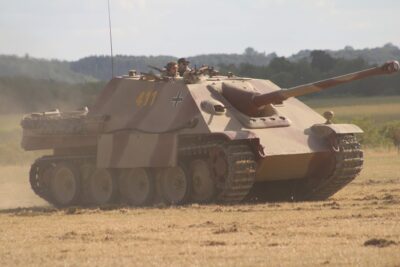
The Weald Foundation Spring Members Open Day takes place on Friday, 8 May 2026 – a dedicated half-day built around what our members have been asking for. Hear original research on Jagdpanther JP411 provenance and Sd.Kfz armoured car markings, tour the working workshops, and explore the full collection. Places are strictly limited and open to members only.

Every image of a German armoured vehicle from the Polish campaign onwards shows a white cross. But which cross, at what size, and where on the hull? For the Foundation’s Sd.Kfz.223 the answers had to be established from primary sources before the crosses could be painted. Part IV sets out the regulatory trail followed to get them.

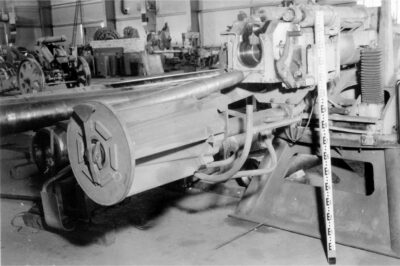
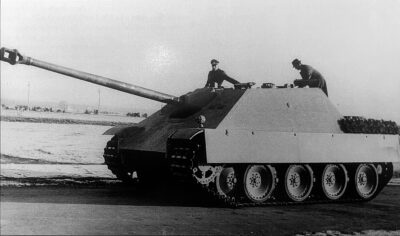
In February 1945, the Heereswaffenamt set in motion a project to give the Jagdpanther an automatic loading system. Three primary documents record its brief life. Two photographs show the hardware existed. The war ended before anything more could happen.

This article has 1406 words Reading time: 7 minutes There are 6 photos Become a Member – Access the Full Article Members gain access to…

This article has 1432 words Reading time: 7 minutes There are 6 photos Become a Member – Access the Full Article Members gain access to…

This article has 901 words Reading time: 4 minutes There are 2 photos Become a Member – Access the Full Article Members gain access to…

This article has 1045 words Reading time: 5 minutes There are 5 photos Become a Member – Access the Full Article Members gain access to…

This article has 235 words Reading time: 1 minute There is 1 photo Become a Member – Access the Full Article Members gain access to…

This article has 1289 words Reading time: 6 minutes There are 4 photos Become a Member – Access the Full Article Members gain access to…

This article has 1357 words Reading time: 6 minutes There are 13 photos Become a Member – Access the Full Article Members gain access to…

This article has 1438 words Reading time: 7 minutes There are 5 photos Become a Member – Access the Full Article Members gain access to…